

While hardware refresh cycles often get the most attention in IT budgeting, the largest area of preventable IT overspend in most enterprises isn’t devices — it’s software. And unlike hardware mistakes, software waste compounds every month.
In 2024, enterprise organizations spent ~$100 million on applications their employees didn’t use, didn’t need, or no longer had access to. With SaaS adoption surging and shadow IT growing unchecked, reclaiming unused software licenses is now one of the fastest and least disruptive ways to reduce operational costs.
ControlUp brings the visibility needed to make this possible.
The Staggering Reality of SaaS Sprawl and Software Waste
The financial impact of unused software is staggering across the board. While the average enterprise wastes roughly $18M annually on idle licenses, larger organizations can see that figure skyrocket past $127M. This isn’t just an enterprise problem; even SMBs lose up to $2M each year to software that sits dormant.
When companies are only utilizing 49% of the SaaS licenses they provision, the need for deep-dive reporting into 30-day activity tracking becomes a financial imperative rather than a luxury.
Quantifying SaaS Overspend: High-Tier Subscriptions vs. Real-World Use
The cost of oversight becomes clear when you look at individual high-tier subscriptions. Paying $840 per user annually for Adobe or $456 for Microsoft 365 E5 is a sound investment for power users, but it becomes pure waste for employees who only require basic tools like MS 365 E1, which costs just $120.
These discrepancies—from $200 Claude seats to $192 Miro licenses—create significant budget leakage when organizations lack a ‘single pane of glass’ to correlate what they bought with what is actually being used.
Even a single application can have a massive financial impact, especially if multiplied across many users in various business groups:
For CIOs and CFOs, these numbers underscore a simple truth: Software oversight is no longer just an IT issue — it’s a financial strategy problem.
Why Organizations Struggle with Software Spend Optimization
Software waste is rarely intentional. It happens because traditional processes simply can’t keep up with the complexity of modern environments.
IT teams struggle because:
- They deploy and provision software but rely on manual notification to deprovision.
- They lack visibility into whether apps are actually being used.
- Employees change roles, departments, or workflows without software being reclaimed.
- Devices are re‑imaged without software cleanup.
- SaaS access remains active long after an employee leaves.
Finance and business units struggle because:
- Department managers purchase shadow IT tools with a credit card
- There is no unified view of actual usage vs. spending
- Renewals happen automatically without evidence‑based justification
- Cost forecasting becomes impossible when licensing is opaque
- Organizations don’t know whether users need high‑tier licenses or lower‑tier options
This creates an environment where software footprints continuously expand… and costs expand with them.
The Risks of Inefficient License Management: Overspend, Risk & Inefficiency
Without accurate usage data, organizations face several risks:
- Overprovisioning: Buying more licenses than needed — a direct financial loss.
- Under provisioning: Teams share licenses, work inefficiently, or lack tools needed for productivity.
- Unplanned true‑ups: Vendors penalize organizations based on discovered usage gaps.
- Shadow application proliferation: Unapproved tools create security and compliance risks.
- Vendor lock‑in: Renewal negotiations happen without leverage or data — increasing long‑term cost.
Software reclamation addresses all these issues simultaneously.
Bridging the Data Gap: Why IT and Finance Lack a Shared Source of Truth
The core challenge isn’t a lack of policy—it’s a fundamental lack of visibility. Most organizations struggle because they cannot easily correlate what has been installed on an endpoint with what is actually being used by a human being. Without a “single pane of glass” to connect these data points, stakeholders are left guessing about the status of their software estate.
True optimization requires understanding not just what is licensed, but how often those applications are accessed and whether the user associated with that license even still exists within the organization. Furthermore, the complexity of modern work means organizations must distinguish between activity on managed versus unmanaged devices to get a full picture of consumption. Without this multi-layered correlation, it remains impossible to make data-driven decisions on renewals, provisioning, or tier-level licensing adjustments.
Leveraging Real-Time Visibility for Automated Software Reclamation
ControlUp provides the data required to understand actual usage across SaaS apps, including information about who logs in and how often, what devices they are using, active users, and license tier.
This visibility enables IT and Finance to work together, using real data to drive immediate cost reductions.
Optimizing Your 2026 Budget with the ControlUp License Reclamation Dashboard
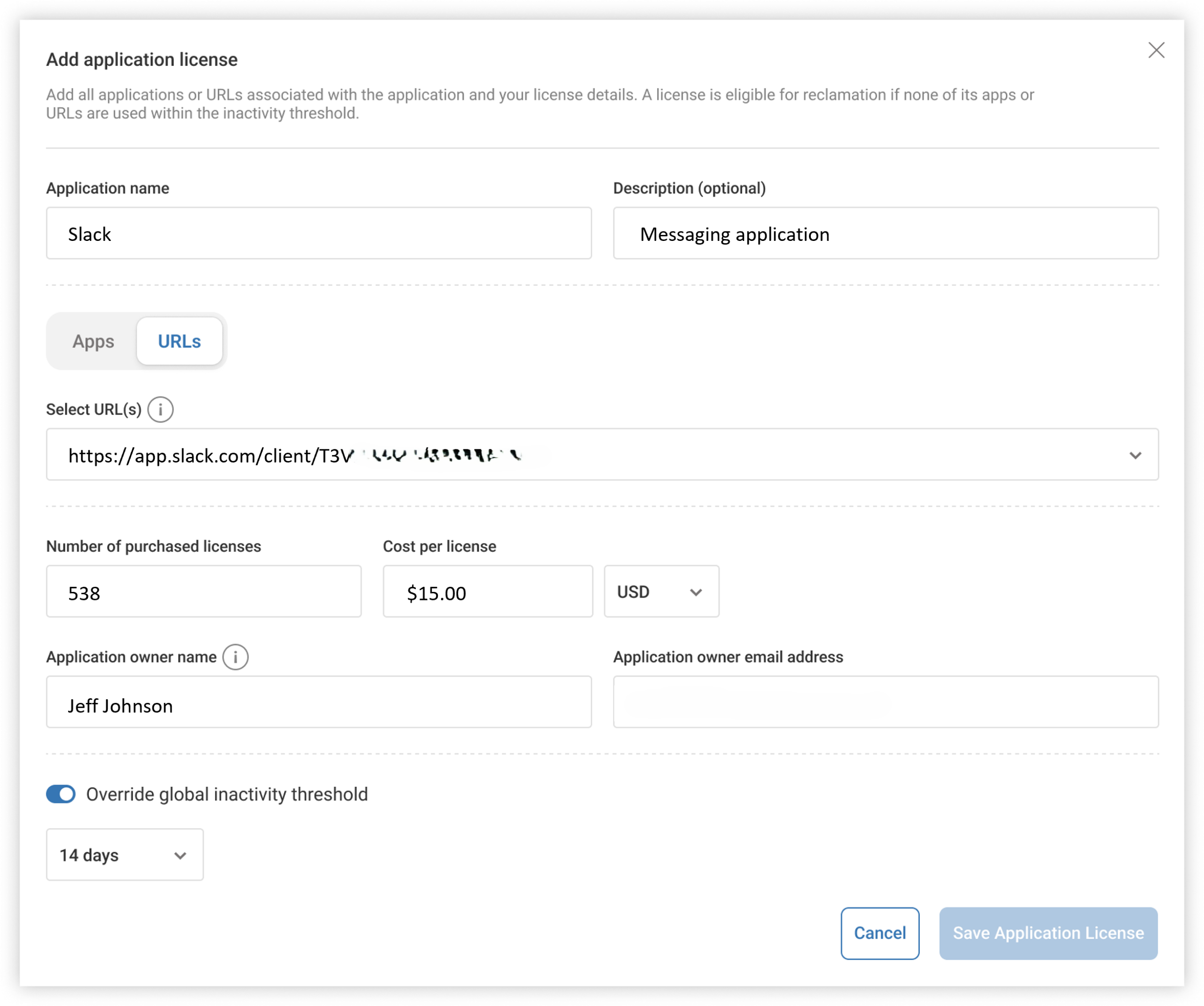
ControlUp bridges the gap between ‘Installed’ and ‘Active’ by providing a visibility-first License Reclamation Dashboard. This solution empowers admins to input contract entitlements to immediately generate a Utilization Heatmap, which compares total deployed seats against real-world usage. By providing an instant calculation of Total Potential Savings, we give strategic leaders the financial insight they need to justify every seat during the 2026 budget cycles.
In one example, ControlUp identified 192 installations of Microsoft Office that were never activated or used, saving $12,000 instantly.

Software Reclamation: The New Frontier of IT Cost Optimization
Most organizations focus on shrinking hardware budgets.
But the biggest savings opportunity lies in software — especially SaaS.
With ControlUp, enterprises can finally answer the questions that matter:
- Who is actually using this license?
- Do they need it?
- Is there a cheaper tier that fits?
- Should we renew this contract at all?
Stop Paying for Shelfware: Data-Driven Governance for 2026
For years, organizations have been forced to accept “budget leakage” as an unavoidable cost of doing business in a SaaS-heavy world. But as 2026 budget cycles approach, the tolerance for “shelfware” has disappeared. Leadership teams are no longer asking if they can save money on software—they are asking where and how much.
ControlUp transforms software reclamation from a manual, error-prone chore into a high-yield financial strategy. By providing the granular, real-time data needed to answer the questions that actually matter—Who is using this? Do they need this specific tier? Can we reclaim this seat today?—we empower IT and Finance to act with total confidence.
Don’t enter your next renewal negotiation or budget audit with blind spots. Shift your strategy from defensive provisioning to proactive optimization and turn your software estate into a lean, high-ROI engine for growth.
