 Breno Basilio
 Modern IT disruptions extend beyond mere infrastructure issues, directly impacting user productivity and experience, therefore, effective response and the progression towards autonomous IT must prioritize real-time, user-centric impact visibility.
- Traditional IT approaches, which focus solely on backend system health, are insufficient because they often fail to capture widespread user experience degradation even when systems are technically "available."
- The foundational requirement for any successful autonomous IT initiative is comprehensive, real-time visibility into user impact across all digital touchpoints, including endpoints, logins, applications, and sessions.
- The ultimate goal is to evolve from reactive troubleshooting to proactive operations and prevention, measured by "recovery confidence"—the proven ability to validate full productivity restoration from the end-user's perspective.
Technology disruptions that impact productivity are no longer rare events.
Sometimes the cause is a cyber event. Sometimes it is an infrastructure failure, an identity issue, a cloud dependency, or application degradation that spreads faster than teams can isolate it. Whatever the trigger, the pattern is the same: what starts as a technical problem quickly becomes an operational problem, and then a user experience problem.
That shift matters.
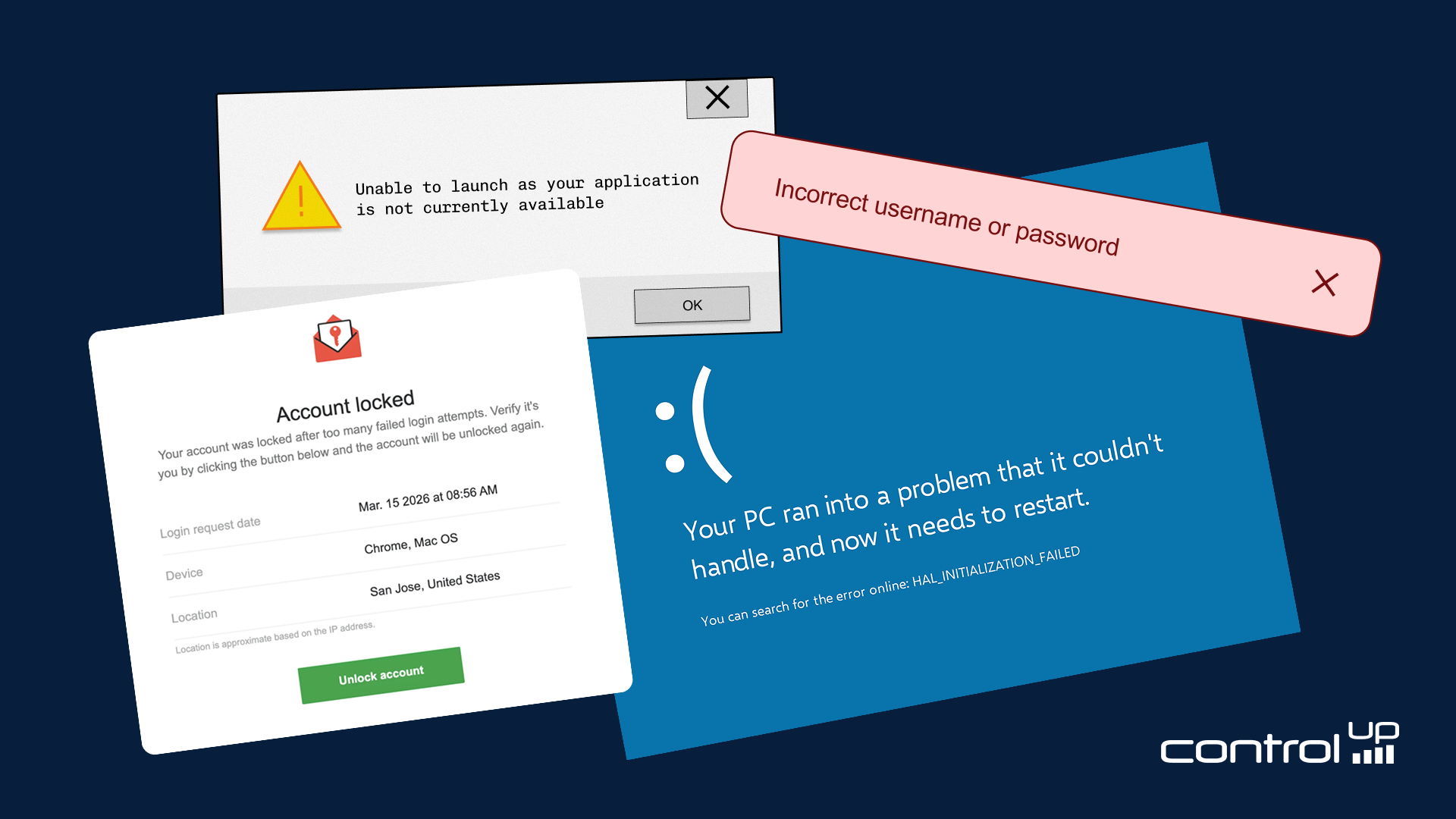
For many organizations, the real cost of disruption is not simply that something broke. It is that employees cannot log in, applications do not launch, workflows slow down, service desks get flooded, IT teams lose time correlating signals, and the business is left asking the same urgent questions: Who is impacted, how badly, and what do we do next?
This is where the conversation needs to evolve.
Disruptions Are No Longer Just Infrastructure Events
For too long, organizations have approached technical disruptions primarily through the lens of infrastructure health. Is the server up? Is the network reachable? Is the application technically available? Have the alerts quieted down?
Those are still important questions, but they are no longer sufficient.
An application can be “up” while employees are unable to log in. A virtual desktop environment can be technically available while sessions are unusable. Identity services can be partially degraded in ways that create widespread operational friction long before a formal outage is declared. A security event can be contained from a backend perspective while end users continue experiencing downstream disruption.
This is the blind spot many IT organizations still face.
The issue is not just whether systems are online, but whether people can work and remain productive.
For this reason, disruption response must go beyond backend status. It must deliver real-time insight into endpoint, application, login, session, and workflow impact.
The First Requirement of Autonomous IT Is Situational Awareness
There is a great deal of conversation in the market right now about AI, automation, and autonomous operations.
However, an autonomous or semi-autonomous system cannot make good decisions if it cannot accurately detect what users are experiencing, identify where the problem is actually manifesting, distinguish symptom from cause, and verify whether remediation worked.
That means the path to autonomous IT does not begin with automation for its own sake. It begins with visibility.
Organizations need the ability to answer, in near real time:
- Who is impacted?
- Is the problem localized or widespread?
- Is this an endpoint, login, application, session, or dependency issue?
- What workflows are being affected?
- How severe is the user experience degradation?
- Has recovery actually occurred from the user’s perspective?
Without those answers, response remains manual, fragmented, and reactive.
With those answers, IT can move far more intelligently and far more proactively.
Why Visibility Matters More Than Ever
The operational burden of disruptions is rising, because modern IT environments are more distributed, more interdependent, and more fragile than they appear on paper.
Users work across physical endpoints, VDI, DaaS, SaaS, identity providers, cloud-hosted applications, and increasingly complex authentication chains. A disruption in one layer often creates symptoms in another. Meanwhile, the teams responsible for troubleshooting are frequently spread across infrastructure, EUC, cloud, identity, networking, security, and support functions.
This makes speed of understanding incredibly important.
The faster an organization can connect a technical issue to user and workflow impact, the faster it can prioritize the right response, communicate with credibility, and reduce wasted time across teams.
This is especially critical in environments where downtime or degradation affects frontline operations. Healthcare is one obvious example, but the same principle applies across financial services, manufacturing, retail, logistics, government, and any other environment where digital workflows support time-sensitive work.
In all of these cases, disruption becomes bigger than IT telemetry. It becomes an issue of continuity, productivity, and confidence.
From Reactive Troubleshooting to Proactive IT Operations
This is where modern digital employee experience and operational visibility platforms change the equation.
The goal is not simply to generate more alerts. It is to create operational clarity.
When IT can proactively detect and understand user impact across endpoints, logins, applications, and sessions, teams are in a much better position to triage faster, focus on what matters, and validate recovery with confidence. Platforms like ControlUp ONE help make that possible by giving IT teams real-time visibility into the actual user experience, not just backend system status.
That alone is a meaningful step forward from traditional reactive operations.
It also creates the foundation for the next stage of IT maturity.
Once organizations can reliably observe impact, correlate patterns, and identify likely causes, they can begin to automate more of the response process. Over time, that evolves from proactive detection and guided remediation into more predictive, more adaptive, and ultimately more preventive operations.
The Future of IT Operations Will Be Measured by Recovery Confidence
One of the most overlooked challenges during disruption is not simply finding the issue. It is knowing when the issue is truly resolved.
Infrastructure metrics may stabilize. A service may be restored. A security team may declare containment. If users still cannot access what they need, workflows stay degraded, or performance remains inconsistent, recovery is not complete.
That’s why the future of IT operations must be measured not only by detection speed, but also by recovery confidence.
- Can the organization prove that employees are back to normal?
- Can it validate service restoration from the user perspective?
- Can it identify residual friction before it turns into another wave of tickets, escalations, and lost productivity?
Those capabilities separate mature IT organizations from reactive ones.
They will become even more important as enterprises adopt AI-driven operations. Automation without validation creates risk. Automation with visibility creates resilience.
Autonomous IT Starts with Understanding
The market often talks about autonomous IT as though it is a destination defined by AI alone. It is not.
AI matters. Automation matters. Orchestration matters. But none of them create value in isolation.
Autonomous IT begins when organizations can see clearly, understand quickly, and act confidently in the face of disruption.
It begins when IT stops asking only, “Is the system up?” and starts asking, “What are users experiencing, what is the operational impact, and what should happen next?”
That is the real shift.
And the organizations that make it will be the ones best positioned not only to respond to disruptions more effectively, but to prevent more of them over time.