Building Reliable Sustainability Reports
Creating reliable corporate sustainability reports requires good intentions; it also demands systematic data collection, clear accountability, and stakeholder alignment.
Data Collection and Measurement
Modern sustainability reporting software can automate much of the heavy lifting, but IT leaders must establish the foundation:
- Real-time monitoring: Deploy tools that track device-level energy consumption, idle time, and utilization patterns across your entire EUC environment.
- Automated data aggregation: Manual spreadsheet reporting doesn’t scale. Invest in platforms that can automatically collect and normalize emissions data from diverse IT systems.
- Audit-ready documentation: Ensure your carbon footprint reporting can withstand external verification by maintaining clear data lineage and measurement methodologies.
Cross-Functional Collaboration
Effective sustainability reporting requires tight collaboration between IT, finance, and sustainability teams:
- Unified metrics: Establish common KPIs that connect IT operational data to corporate environmental goals.
- Regular reporting cadence: Align IT sustainability metrics with quarterly business reviews and annual reporting cycles.
- Stakeholder communication: Translate technical IT data into business language that executives and board members can understand and act upon.
Confidence Through Transparency
For IT leaders, transparency isn’t just about ticking regulatory boxes—it’s about producing data that stakeholders can trust and act on. Reports should balance:
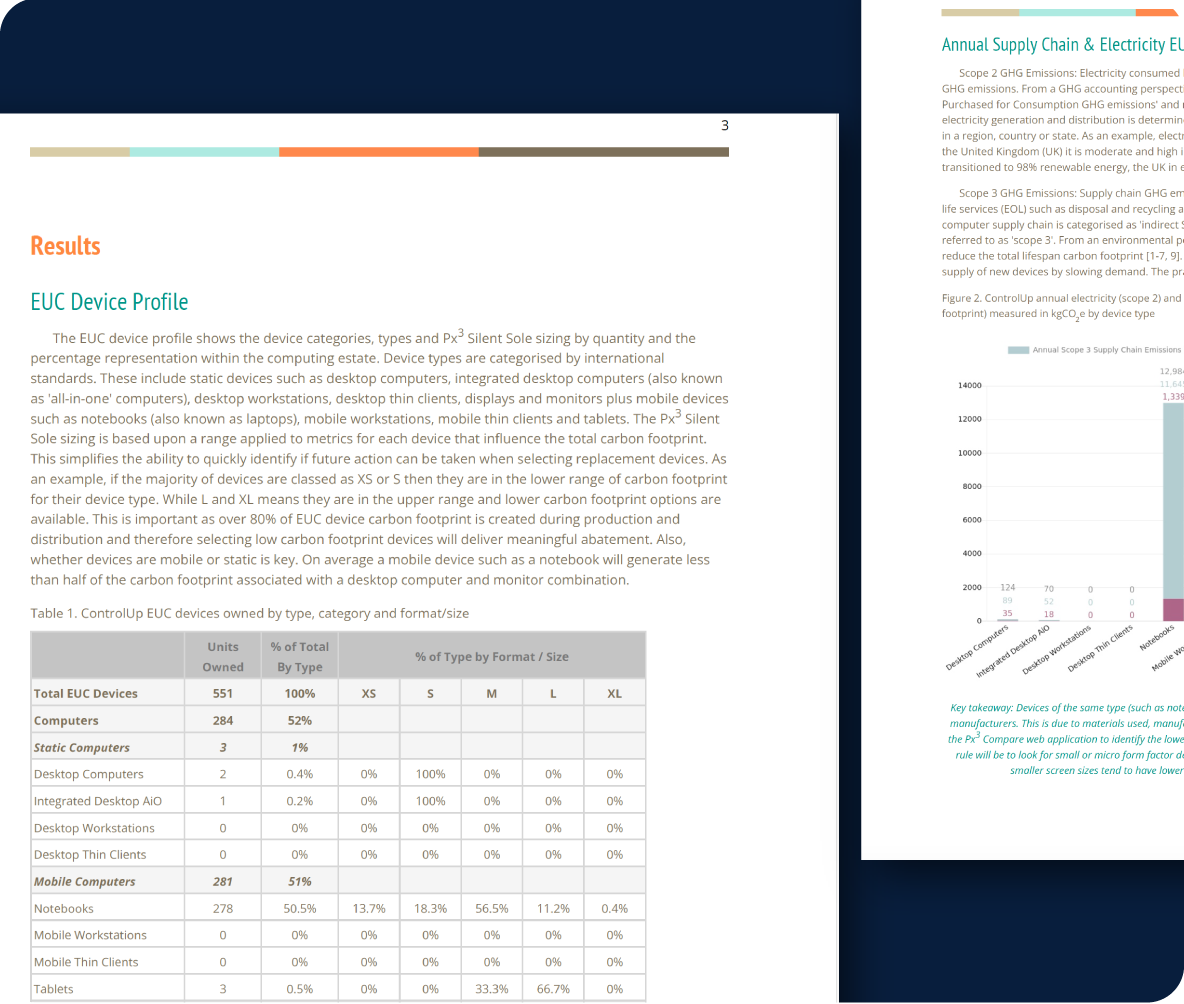
- Quantitative Data: Concrete metrics such as device-level energy consumption, idle time, and EUC emissions that can be independently verified.
- Qualitative Insights: Clear narratives explaining IT strategies like device lifecycle planning, virtualization efficiency, and SaaS optimization initiatives.
- Stakeholder Engagement: Active collaboration across IT, finance, and sustainability teams to ensure data alignment and shared accountability.
Together, these elements create a solid view of how IT contributes to overall sustainability performance.
Overcoming IT’s Biggest Hurdles
Despite the clear benefits, IT leaders face two significant hurdles when implementing effective sustainability reporting: data collection complexity and organizational change management.
The Data Collection Dilemma
Spreadsheet-based reporting simply doesn’t scale when you’re tracking emissions across thousands of devices and multiple locations. Manual data gathering is time-intensive, error-prone, and impossible to maintain with any consistency.
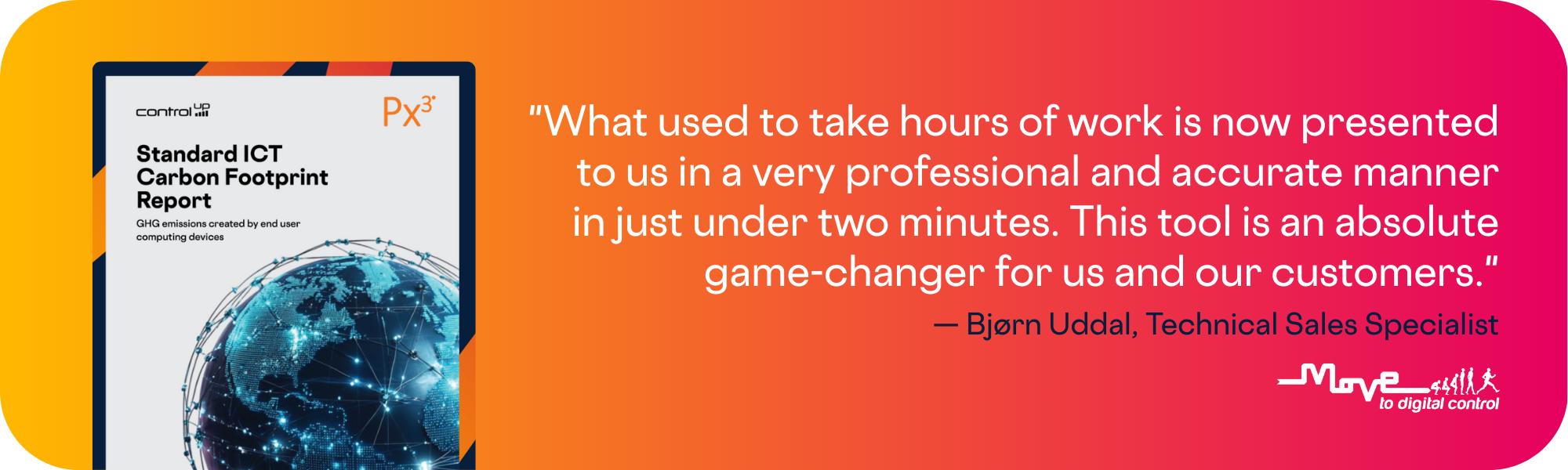
The solution lies in automation. Modern sustainability reporting software can automatically collect, normalize, and validate emissions data from diverse IT systems… from individual laptops to enterprise cloud platforms. This automated approach ensures accuracy while freeing IT teams to focus on strategic optimization rather than data wrangling.
The Change Management Challenge
Technology alone isn’t enough. Sustainable IT practices require fundamental changes in device policies, lifecycle management, and energy optimization measures…with buy-in across the business!
Success requires clear communication about the business benefits of sustainable IT practices (cost savings, compliance), along with establishing new workflows and accountability structures. So, sustainability is a shared responsibility rather than an IT-only initiative.
Leaders who successfully navigate these challenges can modernize their entire IT operation while delivering measurable sustainability impact that resonates at the board level.
Technology Solutions for Streamlined Reporting
Technology teams are uniquely positioned to make reports both accurate and actionable. The right sustainability reporting software can transform complex data collection into automated, accurate processes. Look for the following features:
→ End-user monitoring platforms provide granular visibility into device power consumption, idle times, and efficiency. This helps identify optimization opportunities while supporting accurate carbon footprint reporting.
→ Integrated EUC sustainability dashboards offer real-time views of emissions across your technology fleet, enabling proactive management and immediate identification of efficiency gains.
→ Automated reporting tools can align with CSRD and ESRS standards, reducing manual effort while ensuring compliance with evolving regulatory requirements.
The key is choosing solutions that integrate seamlessly with your existing IT infrastructure while providing the depth and accuracy needed for credible sustainability reports.