Libre-service informatique alimenté par l'IA
Give employees personal help desk support that catches problems before they call, within the policies that you define, and based on IT support models you trust. Pulse AI Resolve detects, diagnoses, and remediates digital workplace issues automatically, so tickets stop piling up and your team gets back to the work that matters.
Avoir une démo-
Hello preview, I am your ControlUp Resolve Concierge. How can I help you today?
-
Why is my laptop slow?
-
Getting started
Looking into what you reported.
-
Checking your PC
Taking a look at your PC.
-
Checking CPU use and logs
Checking you CPU use and reviewing recent report logs for errors that might explain the slowness
-
All done
Making sure the fix worked.

Le partenaire IA sur les appareils des employés
Pulse Resolve est un hub en libre-service natif de l'IA qui réside sur les appareils des employés et se connecte au ControlUp ONE plate-forme et IA Pulse engine. It monitors performance in real time, catches problems early, and guides employees to fast, clear fixes, escalating when needed.

Built on the Support Ladder IT Trusts
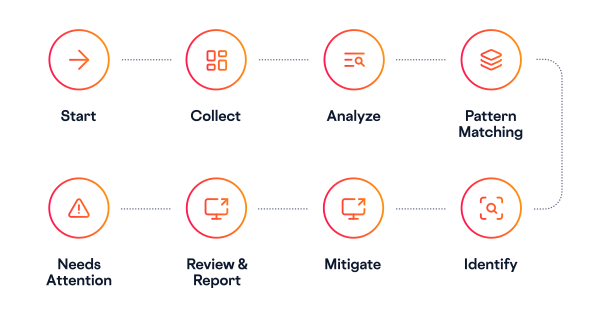
Pulse Resolve automates the same tiered support model that IT teams already rely on, so routine issues can be resolved at the right level. IT sets the control level—from running approved fixes to full agentic troubleshooting—so you can expand automation at your pace.

When human intervention is needed, Pulse Resolve hands off to IT with full context attached.

Harder issues get reasoned through by agentic AI, always inside the rules IT sets.

Recognized issues are matched to an approved fix and resolved instantly.
Built on the Support Ladder IT Trusts
Pulse Resolve automates the same tiered support model that IT teams already rely on, so routine issues can be resolved at the right level. IT sets the control level—from running approved fixes to full agentic troubleshooting—so you can expand automation at your pace.
Recognized issues are matched to an approved fix and resolved instantly.
Harder issues get reasoned through by agentic AI, always inside the rules IT sets.
When human intervention is needed, Pulse Resolve hands off to IT with full context attached.
Deux voies pour une résolution instantanée
In an ideal world, every issue is solved before an employee notices it. With Pulse Resolve, that world is within reach. It responds to trouble before a breakdown occurs and can begin resolving right away. Whether the system catches the issue first or the employee does, it responds with equal speed, transparency, and control.

Quand le système s'en aperçoit en premier : Remédiation proactive
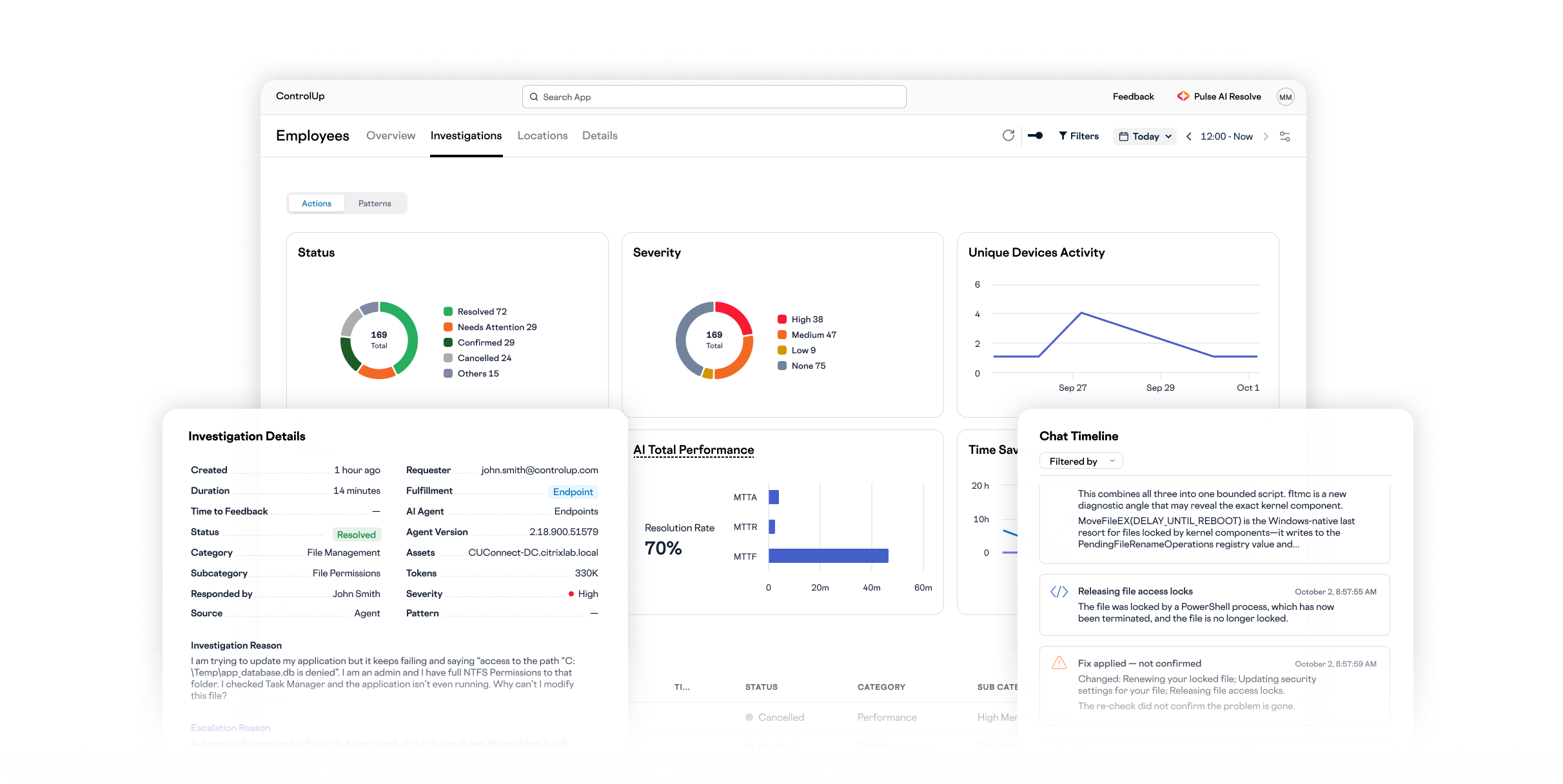
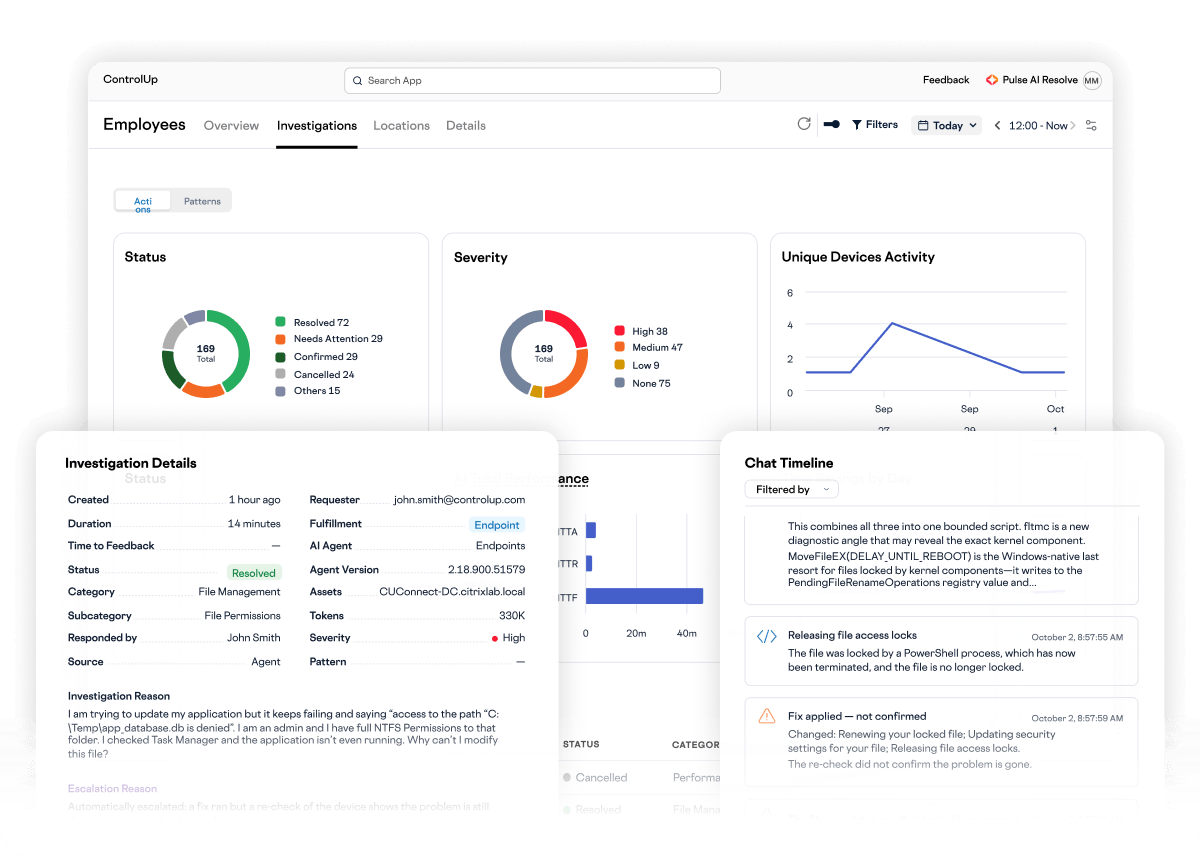
The system monitors performance metrics every 10 seconds across CPU, memory, and disk, while investigating event logs and registry directly on the device. It only alerts based on sustained breaches, not momentary blips, so “alert fatigue” is a thing of the past.
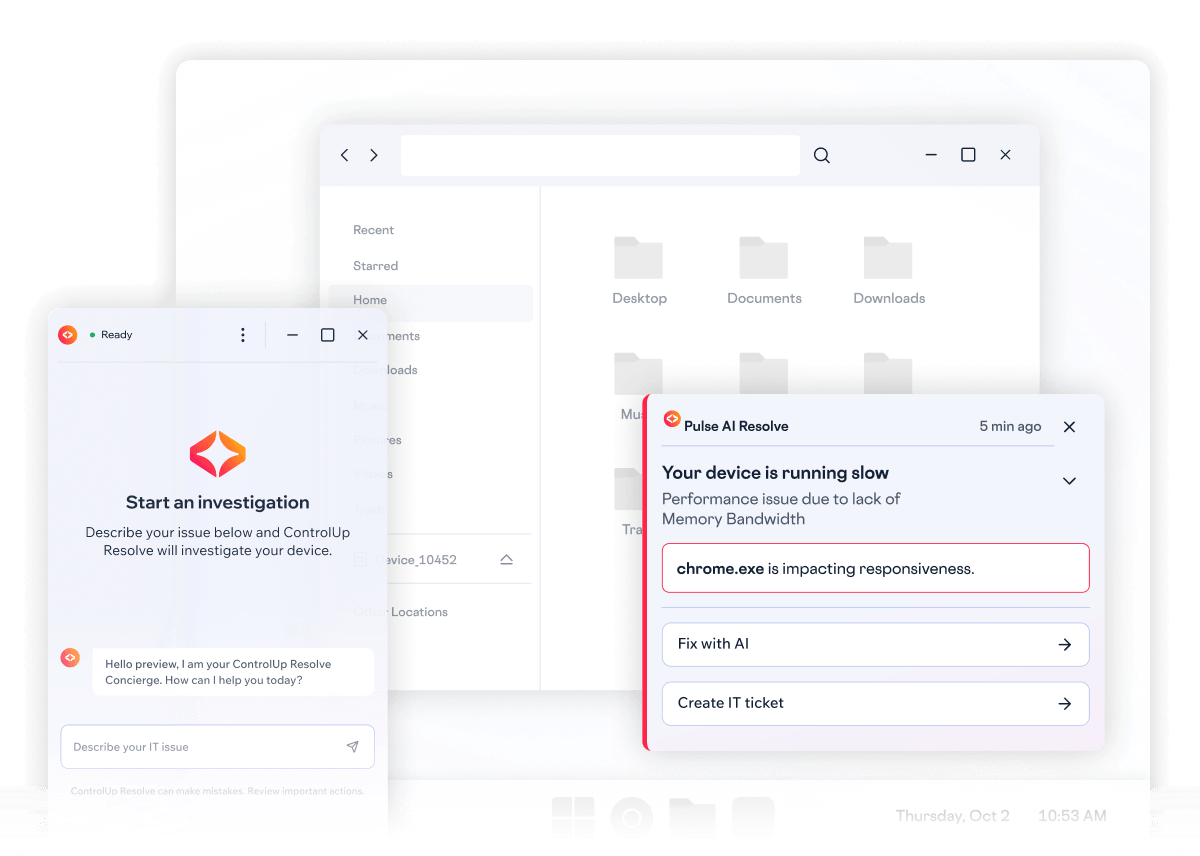
When an issue is detected, Pulse Resolve initiates a chat, investigates, diagnoses, and fixes in real time. Users stay informed and provide consent when approval is required.
When escalation is needed, employees can do so with one click. The full investigation log is included for IT. Pulse Resolve can also auto-create tickets in ServiceNow, Jira, and Freshdesk.
Caps and cooldowns limit how often employees see alerts, so they stay informed without tuning out.
When an issue appears across multiple devices, IT can run the same investigation and fix across all devices in a single action.

Quand l'utilisateur le ressent en premier : Soutien à la demande
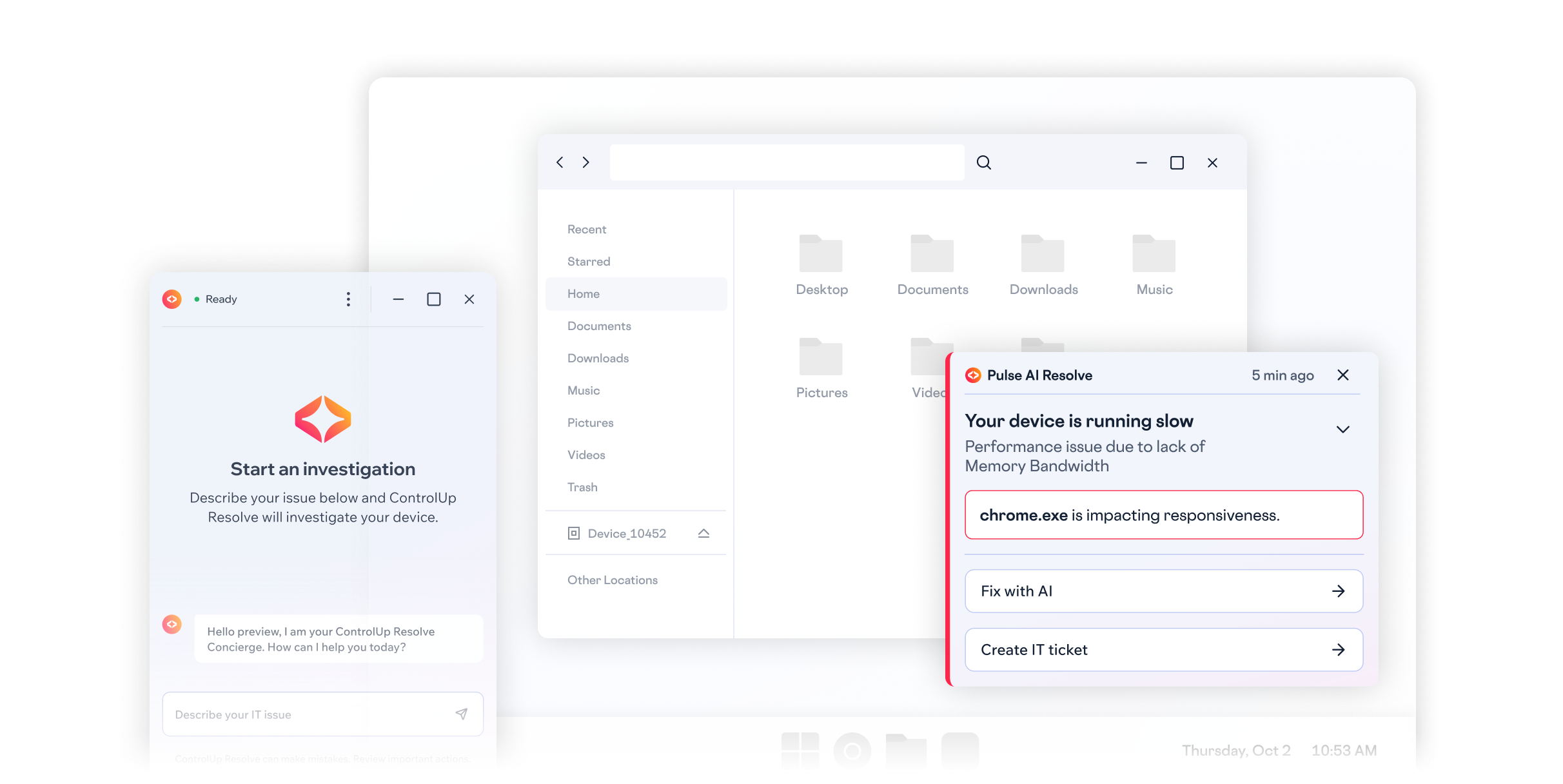
When applications freeze, performance lags, or something just feels off, employees get instant AI-powered IT support without submitting a ticket or waiting for the help desk.
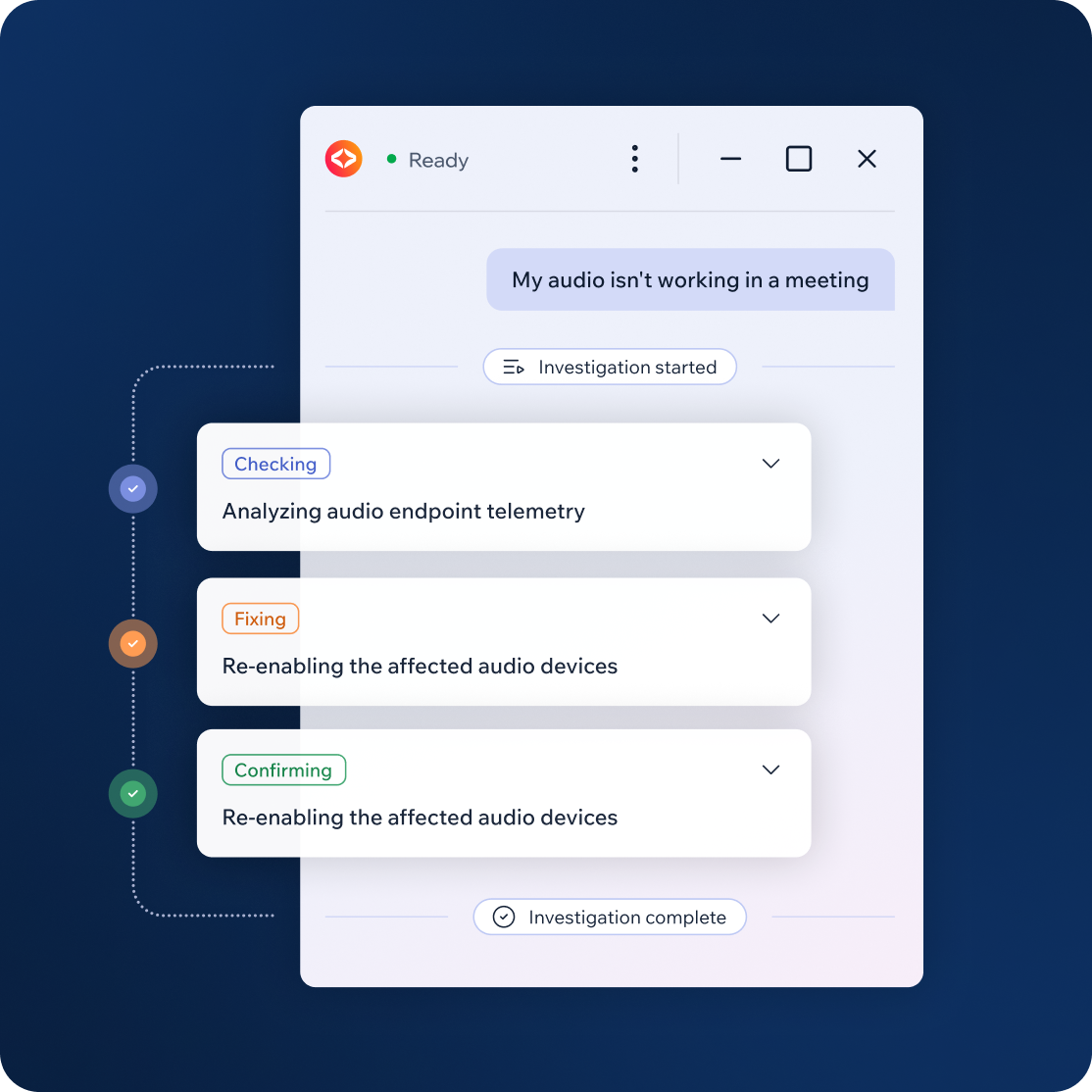
Users describe issues in plain language, like “My Outlook is freezing,” to start an immediate diagnostic session.
Pulse Resolve intègre des métriques pertinentes et des modifications récentes de l'environnement pour identifier la cause et recommander une solution.
L'IA explique ce qu'elle a trouvé et demande le consentement avant d'apporter le moindre changement.
Governed by Design
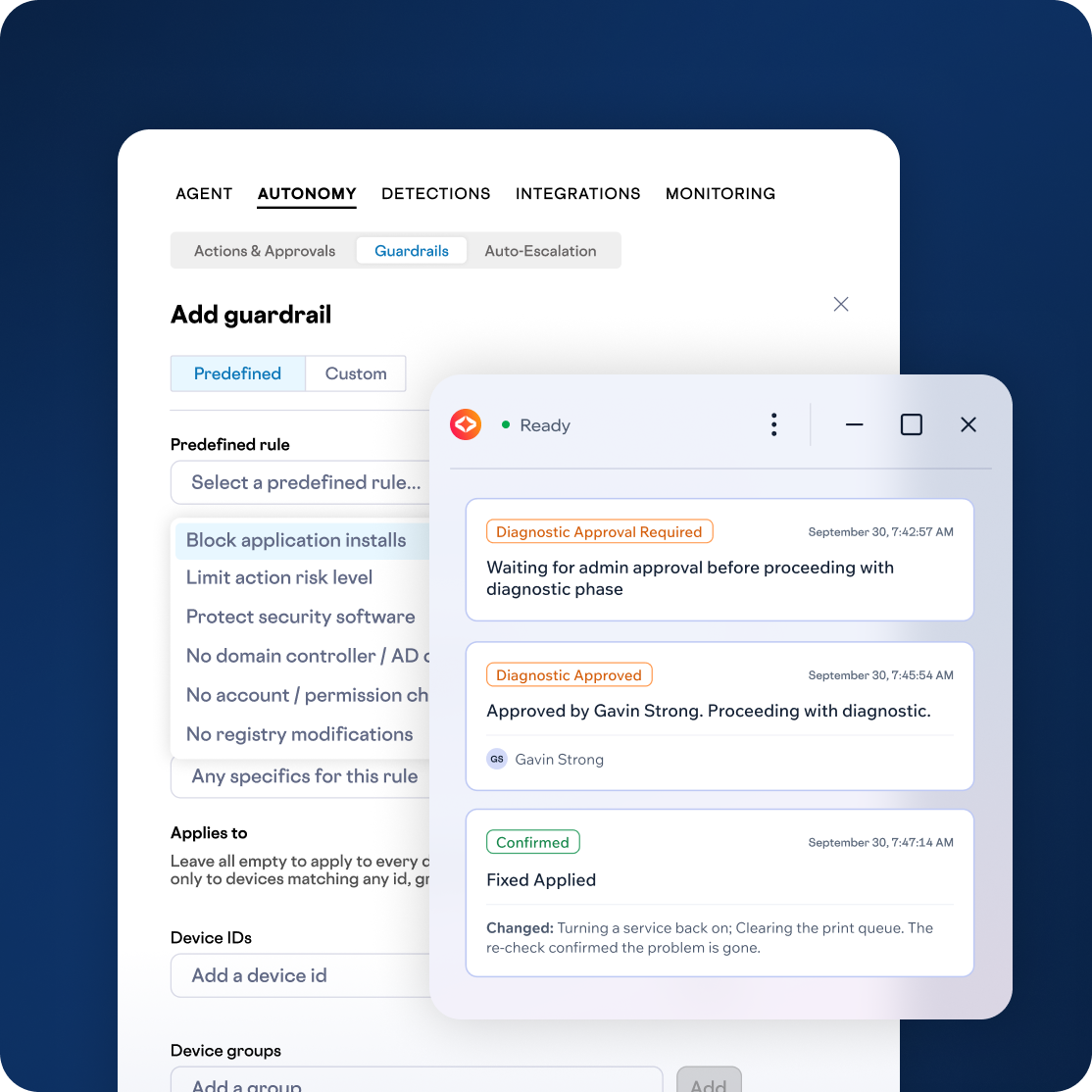
“Autonomous” only works if it’s trustworthy. Pulse Resolve is built around control, safety, and proof. IT sets the guardrails once, and the system enforces them every time.
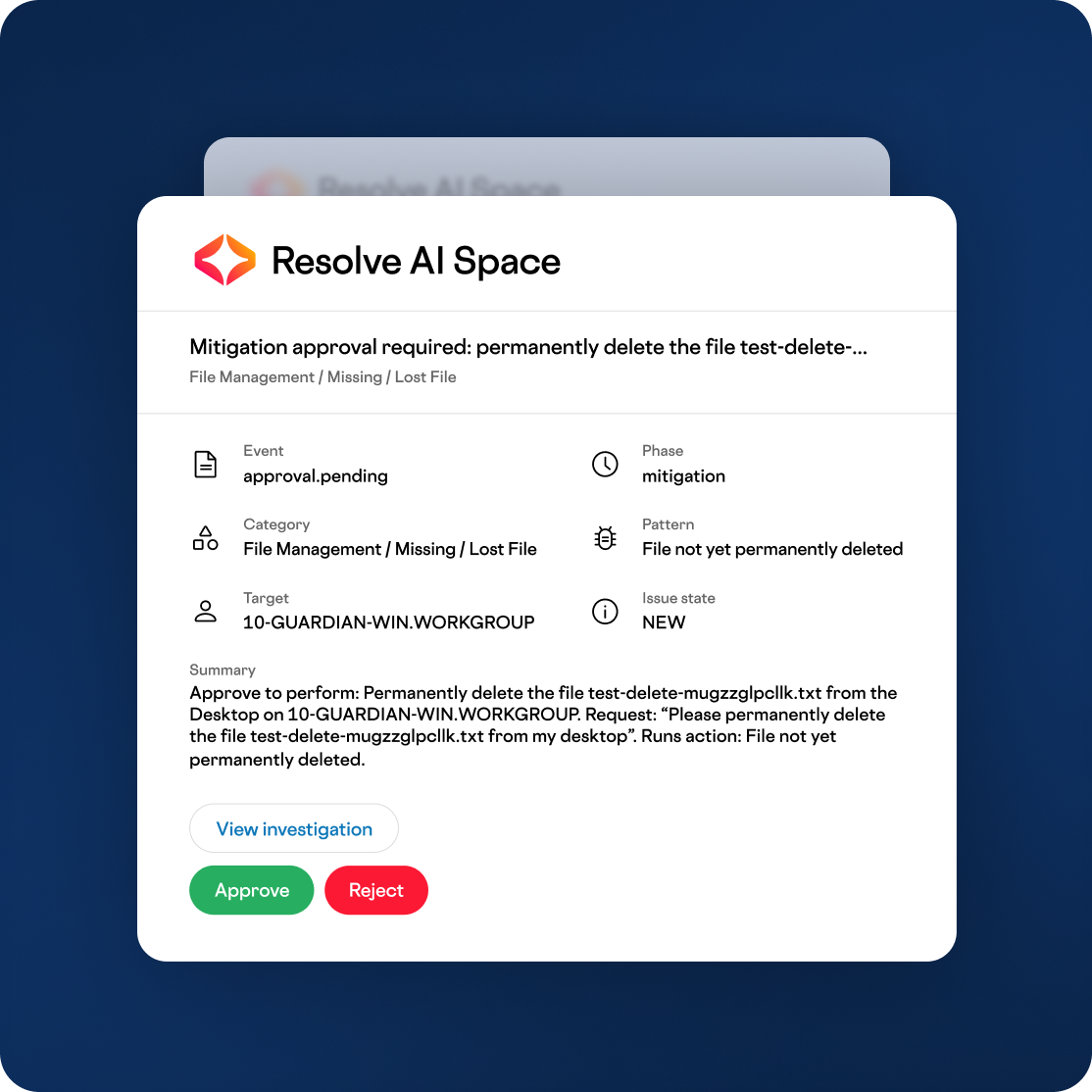
- Control: Custom guardrails, granular admin approvals, and six scoped RBAC roles keep every action within policy. Admins can edit proposed fixes before they run, require employees to confirm irreversible actions, and control what fixes can be undone.
- Safety: Every action passes a pre-execution safety gate, and L2 uses vetted actions rather than free-form scripts. It refuses to act when the target is ambiguous.
- Proof: Resolve re-checks the device after every fix to confirm it actually worked, and reports honest outcomes: resolved, not resolved, or false positive. If a reversible fix didn’t help, employees can undo it in one click. Full audit trails are maintained down to each command.
Fits Your Environment
Ticket deflection only works if self-service fits seamlessly into how your organization already operates. Pulse Resolve is built to adapt rather than to be worked around.
- Built for Real Use: Multiple issues raised in a single message are investigated and verified separately, with retries, undo, and automatic escalation if a fix doesn’t work. Branding, accessibility, and a 29-language interface make it feel native to your organization.
- Connects to Your Stack: MCP Connectors extend what Resolve can see and act on across identity, EDR, cloud, and SaaS systems, including Okta and Microsoft 365, to check why a sign-in failed in Entra ID, push an Intune policy sync, or run a Defender scan. Knowledge base integration pulls from your own documentation, with citations, and Slack or webhook approvals let IT review fixes from tools they already use.
- Self-Maintaining: Pulse Resolve plugs into your existing workflows, and its fix library automatically merges similar fixes, keeping it lean over time.
Avantages stratégiques pour votre entreprise
Pulse Resolve transforme le support informatique proactif en résultats commerciaux mesurables.
- Fewer Tickets: Equip employees with the tools to conduct basic troubleshooting, and watch your ticket volume drop.
- Résolution plus rapide: Resolve many issues instantly with AI and reduce the time employees spend waiting in support queues.
- Clear Outcomes: Every fix is verified and reported as resolved, not resolved, or false positive, so IT can see exactly what self-service is solving.


 English English
 Deutsch
 Français